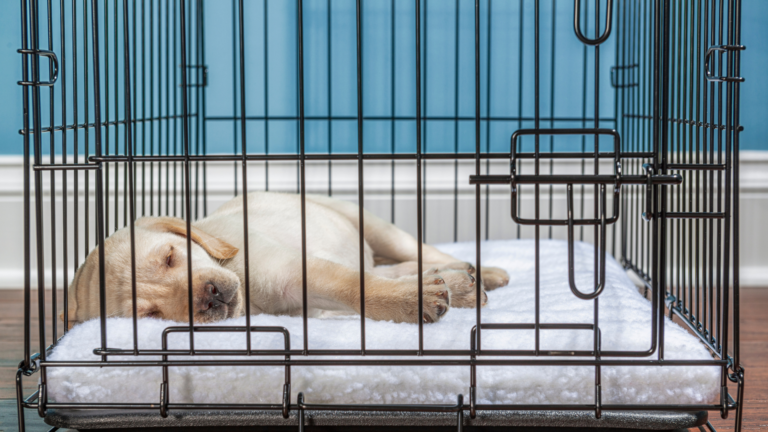
Myth: Crates are restrictive and punitive for puppies.
Crates separate the puppy from their ‘pack’ and thus are unhelpful for puppies. Truth: Crates create a valuable boundary for your puppy, keeping them safe. When introduced correctly, a crate can become a safe and comforting space that supports your puppy’s learning and independence. From a dog’s perspective, a crate can mimic a den-like environment—a secure space where they can rest and feel protected. When used properly, crates can:
Support house training
Reduce stress and anxiety
Provide a predictable daily routine
How to Use a Crate in a Positive Way 1. Choose a Crate That Helps Your Puppy Feel Included A crate with open wire sides allows your puppy to observe what’s happening around them while still feeling secure. If your puppy needs more privacy, you can easily drape a light blanket over part of the crate to create a cosy, enclosed area.
2. Make the Crate Inviting Encourage your puppy to use the crate voluntarily by adding:
Comfortable bedding
Safe toys
Occasional treats
This helps to build a positive association with the space.
3. Introduce the Crate Gradually Start with short, positive sessions and slowly increase the amount of time your puppy spends in the crate. Stay close to the crate initially so your puppy doesn’t feel excluded. Keeping early experiences calm and rewarding helps your puppy feel safe and relaxed.
4. Never Use the Crate as Punishment
The crate should always be associated with comfort, safety, and relaxation—never as a consequence for unwanted behaviour. If you do put your puppy into their crate after some unwanted behaviour, do it gently and with the motive of keeping your puppy safe from further unwanted behaviour.
Practical Tips for Successful Crate Training
Choose the right location:
Place the crate in a quiet but not isolated area. Ideally, your puppy should be able to see
what’s going on and notice people approaching, which helps prevent sudden surprises.
Being able to monitor your puppy is also important.
Support calm routines:
Encourage relaxed entry and exit from the crate. In the beginning, this might include:
Using a food-filled Kong or snuffle mat
Sitting next to the crate for reassurance
o Gradually reducing your presence as your puppy settles
Use the crate consistently:
Incorporate crate time between training sessions or naps. Crates help manage your puppy’s
environment—preventing them from having too much freedom, which can often lead to
unwanted behaviours.
Why Crates Are Beneficial for Puppies When used kindly and thoughtfully, crates become a source of security and calm. They are a valuable management tool that helps:
Build independence
Create a sense of safety
Support effective learning
Choosing the Right Crate There are many different crate designs available. Choose one that:
Fits comfortably in your space
Can be easily dismantled and moved
It’s best to have your crate ready before your puppy arrives, so you can introduce it right from the start. An alternative to a crate, is a pen. This is much the same idea but without a top. If you would like more help with your puppy – either before they arrive or once they are at home, please get in touch. I offer 1:1 support and run puppy classes.
The Trouble with a Wagging Tail
If I got £1 for every time I heard someone say a wagging tail means the dog is happy, I would be a rich woman!
It’s a common misconception, particularly...