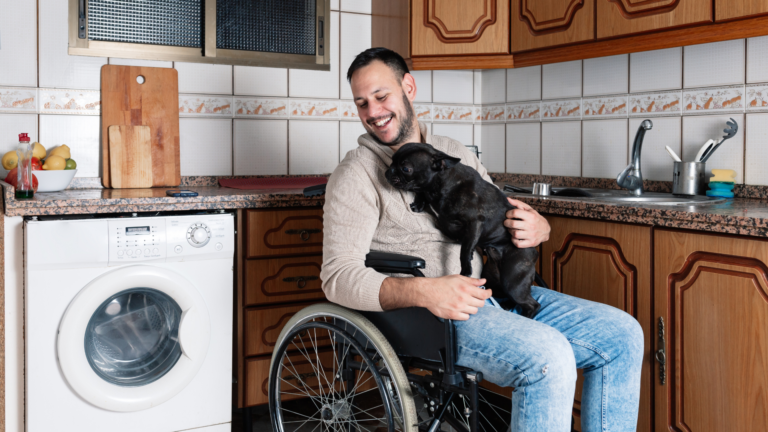
The idea that you must be the “alpha” or “pack leader” comes from outdated interpretations of wolf behaviour. These theories were based on the assumption that, because dogs evolved from wolves, wolf behaviour directly applies to dogs. While this concept remains popular in some circles, it does not reflect modern scientific understanding
Truth: Dogs are social animals and respond very well to safety, choice and kindness.
Treating this ways helps to build the deep companionship bond most of us aspire for when we get a dog in the first place.
Why the “Alpha” Theory Doesn’t Apply to Puppies
Most people bring a dog into their life for companionship. For that relationship to work well, it needs to be built on:
- Respect
- Trust
- Clear and fair boundaries
Like any relationship, this works best when both sides feel understood and supported.
What Puppies Actually Need to Thrive
To build a strong and positive relationship, your puppy needs to feel safe and secure.
This includes:
- Having appropriate levels of choice
- Being able to give (and withdraw) consent
- Being listened to through their behaviour and body language
- Receiving clear, positive guidance
When your puppy is supported in this way, they naturally begin to trust you and follow your lead—making the idea of “dominance” unnecessary.
How to Build a Positive Relationship With Your Puppy
A strong relationship is the foundation of a well-behaved dog. Here are some practical ways to build that connection:
- Meet your puppy’s core needs:
Ensure they have everything they need to feel secure and balanced, including: - Proper nutrition
- Adequate sleep and a safe place to rest
- Enrichment and mental stimulation
- Affection and social interaction
- Appropriate medical care
- Spend quality time together:
Engage in activities your puppy enjoys, such as: - Positive training sessions
- Games like chase, tug, or retrieve
- Be present on walks:
Stay focused on your puppy rather than your phone or distractions. Use walks as an opportunity to: - Practise simple behaviours
- Play small games
- Reinforce engagement
- Let your puppy “win” during play:
This helps build confidence and keeps interactions enjoyable. - Manage excitement levels:
Monitor how stimulated your puppy is becoming and stop activities before they become overwhelmed. While it can be amusing for people, over-arousal (eg. zoomies) is not a comfortable state for puppies.
Why Relationship-Based Training Works
When you focus on building trust and understanding, your puppy learns to:
- Feel safe in your presence
- Make good choices
- Respond positively to guidance
This creates a cooperative relationship, rather than one based on control.
Wrap-Up
Trying to be an ‘alpha’ with your puppy, sets you both up for frustration and disappointment.
By focusing on connection, communication, and consistency, you can build a strong relationship that naturally encourages good behaviour while providing the companionship dogs so excellently provide.
These ideas are just a starting point. If you’d like more support in developing a positive relationship with your puppy, feel free to get in touch for 1:1 guidance, or join a class if you live in my local area.