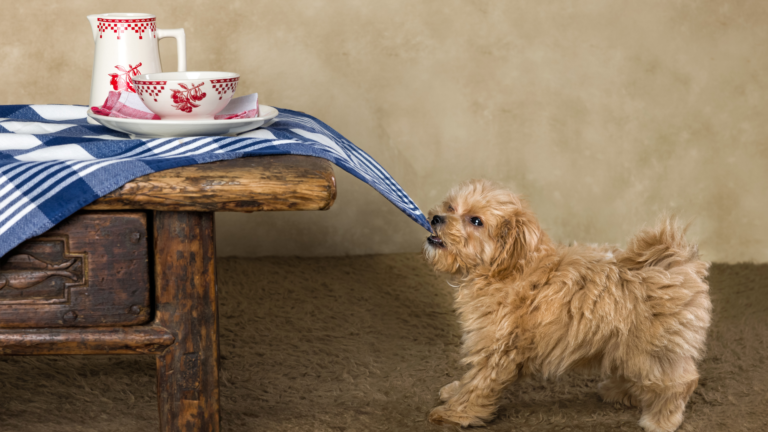
Myth: My puppy is being naughty on purpose!
When your puppy chews table legs, steals socks, ignores cues, or runs off with a slipper, it can feel personal—as though they are deliberately testing boundaries you’ve already tried to set.
Truth: Most unwanted puppy behaviour is driven by unmet needs.
These could include:
Teething discomfort
Boredom
A desire to play
Seeking attention
Why Puppies Don’t Misbehave Out of Spite
As humans, we naturally assign intention to behaviour. If someone ignores us or causes disruption, we often assume there is a motive behind it—all too often assuming the worst.
However, puppies don’t think this way.
Their behaviour is driven by:
Curiosity
Instinct
Immediate needs
They are not trying to be difficult—they are simply responding to their environment.
Understanding Puppy Behaviour
Puppies tend to repeat behaviours that work for them.
For example, if stealing a sock results in attention or a fun chase, they are likely to do it again.
Labelling a puppy as “naughty” or “stubborn” can actually slow progress. These labels focus on blame rather than understanding.
A more helpful approach is to see behaviour as information. Try asking yourself, “How is my puppy feeling right now? How can I support them?”
When you do this, you can respond in a way that aids your puppy’s development and protects your relationship.
Responding to Your Puppy in a Constructive Way
Once you understand that behaviour is communication, you can choose how to respond more effectively.
Depending on the situation, this might include:
Offering a calming activity
Providing a more appropriate outlet for energy
Introducing structured training
Helping an overtired puppy settle
Each response is guided by what your puppy needs in that moment.
Practical Steps to Support Your Puppy
Meet your puppy’s needs: Ensure they have access to food, water, rest, and appropriate outlets for energy. This includes:
Sleep
Play
Physical exercise
Mental stimulation
Chewing, sniffing, and licking activities
Affection and interaction
Reinforce calm behaviour: Notice and reward the behaviours you want to see more of.
Redirect instead of scolding:
Interrupt unwanted behaviours and guide your puppy towards a better alternative. Simply saying “no” is rarely effective and can impact your relationship.
Focus on life skills: Build practical, everyday skills—not just isolated training behaviours.
Ask the right questions:
What is my puppy trying to achieve?
How can I meet this need in a better way?
What can I do to prevent this happening again?
Why This Mindset Matters
When you shift your perspective from blame to understanding, training becomes more effective and far less frustrating.
You are no longer reacting to behaviour—you are guiding your puppy through learning.
Wrap-Up
Can you remember a time when you were young and your care-taker supported you? How did this make you feel? What was your response?
Providing patient, consistent support during this stage of learning can feel challenging at times, but it lays the foundation for a strong, trusting relationship with your dog.
And that is truly worth the effort.
If you would further support with your puppy, get in touch. I run local puppy classes and events around Crieff, Perthshire and offer bespoke 1:1 support locally and online.
The Trouble with a Wagging Tail
If I got £1 for every time I heard someone say a wagging tail means the dog is happy, I would be a rich woman!
It’s a common misconception, particularly...
What Does a “Dream Life” Actually Look Like for a Dog?
If we believe what we read online, we can all live our dream lives. Just follow the right programme, make a plan,...
Why obedience training might not be working.
It was the end of a long week at her new job when Sarah came home to find Sheba, her beloved but rather wayward Border Collie, had chewed...