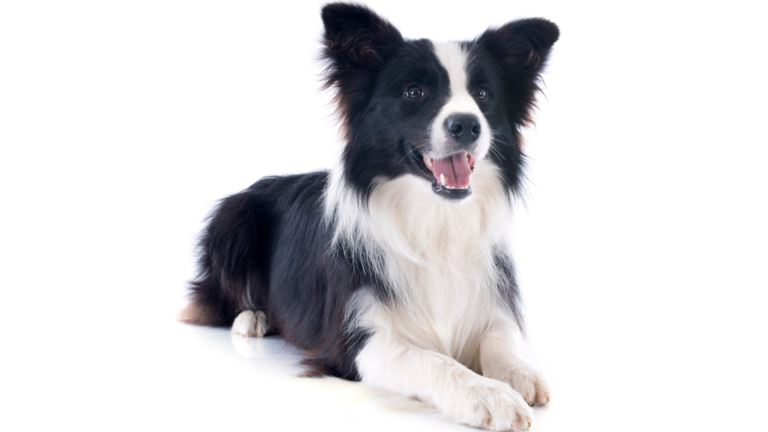
It was the end of a long week at her new job when Sarah came home to find Sheba, her beloved but rather wayward Border Collie, had chewed the leg of her kitchen chair to a dangerous thinness.
‘Why?’ she exclaimed, partly in exasperation, partly confusion, partly fear.
Sheba slunk into the corner, softly wagging the tip of his tucked tail.
Sarah sank to the floor beside him. She hated seeing him like this and knew something wasn’t right but didn’t know what to do next. She had done obedience training with him since he was a pup – and he was excellent at it. He could do all sorts of ‘behaviours’, but when faced with the chance to make a choice for himself, it all seemed to go out the window and other ‘behaviours’ showed up!
Many people have been told that obedience training is essential to have a balanced dog who complies to the very high societal expectations we humans hold for dogs. They attend puppy class to get the commands down, proudly stating their pup already knows ‘Sit’, ‘Down’, ‘Stay’ and ‘Shake hands’. They may practice these consistently, hoping for a dog who will be no trouble.
However, focusing on obedience comes with some pitfalls. As a focus, it implies a desire for compliance and can come with a top-down, ‘alpha’ vibe.
Yet in my work, almost all clients want something completely different.
They want a companion, a buddy.
A connection built on trust.
This is not to say that there is no place for obedience. There is, as we clearly need to lead our dogs to ensure their safety and well-being. We need to set boundaries to avoid conflict and help them fit into our lives and environments.
But I would argue that a focus on obedience is not the way to reach this goal and there is a very real danger that a top-down approach will lead to frustration and fear for the dog but also, possibly, for the people.
There is a better way.
Instead of focusing on obedience, a focus on building a trust-relationship through consistent kindness and support makes obedience a whole lot easier.
If we are aiming for a trusting connection with our dogs, a key way to achieve this is by providing for their needs – all their needs.
Most people know a dog needs food, water, shelter, affection, toys, vet care and walks. However, these provisions are just the beginning, as a dog has many more needs than this.
This is where enrichment comes in as it is how these needs are met.
It doesn’t have to be complicated. A dog’s needs can often be met through activities they are able to enjoy on their own, although some engagement is required. And doing enrichment together can be a great stress-relief for both the owner and dog.
Once these needs are met, a dog will feel satisfied, and many times their behaviour will settle down and ‘obedience’ will not be the issue it was. Some training will still be necessary, but it will be much easier with a satisfied dog.
Obedience training might not be working for a number of reasons, such as poor handler skills, asking too much from the dog or high emotional arousal creating a challenge to learning.
However, it could also be failing to deliver because the dog’s needs have not been met.
With some help from a behaviourist, Sarah realised her mistake. She made some small changes for Sheba – walked him with her friend who had a dog Sheba could play with, left him with some chews when she was out, played some new games with him which met his specific breed needs – and continued with the obedience training, but mostly for fun now!
If you’d like to learn more about enrichment and how it could help your dog, you can sign up for my webinar by joining my mailing list.
The Trouble with a Wagging Tail
If I got £1 for every time I heard someone say a wagging tail means the dog is happy, I would be a rich woman!
It’s a common misconception, particularly...
What Does a “Dream Life” Actually Look Like for a Dog?
If we believe what we read online, we can all live our dream lives. Just follow the right programme, make a plan,...
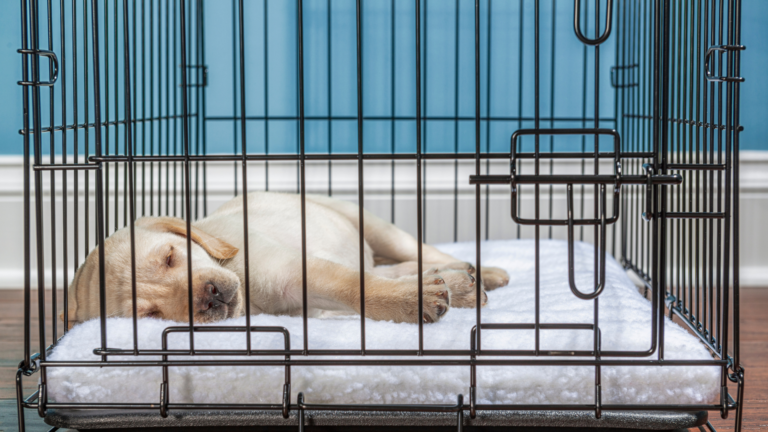
Myth: Crates are restrictive and punitive for puppies.
Crates separate the puppy from their ‘pack’ and thus are unhelpful for puppies.Truth: Crates create a valuable boundary for your...